How to Re-Gelcoat a Boat: The Complete Guide to a Mirror Finish
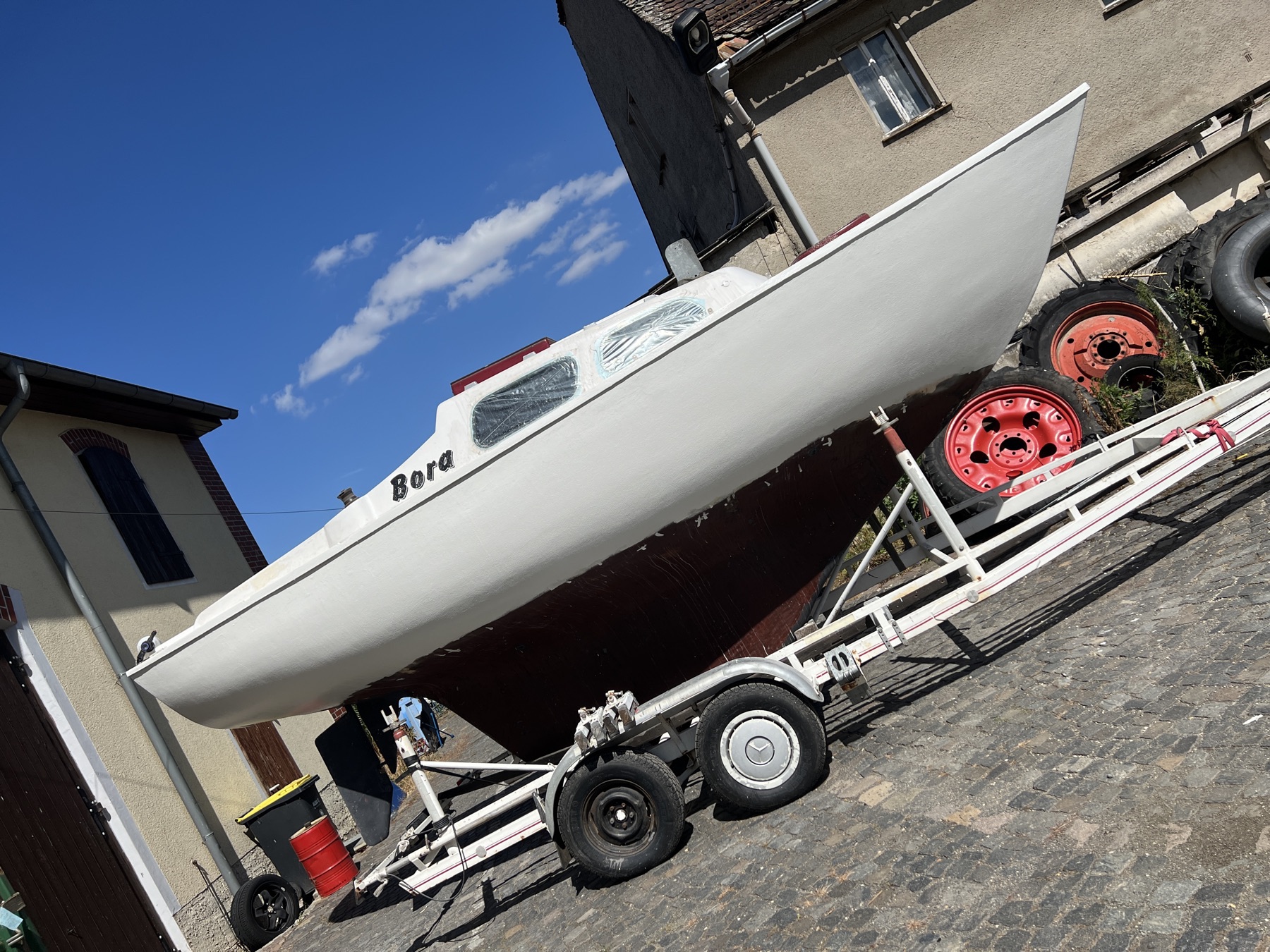
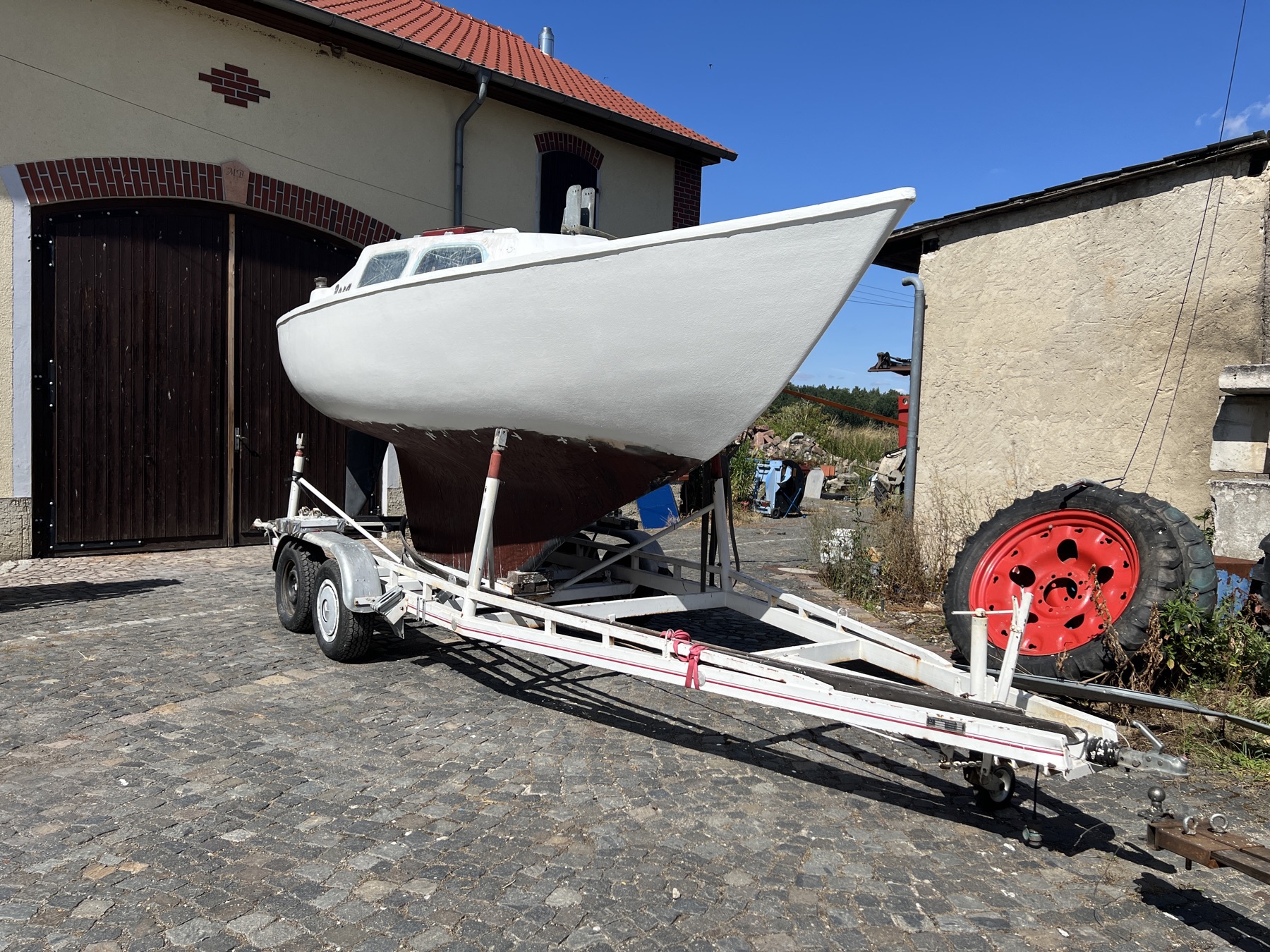
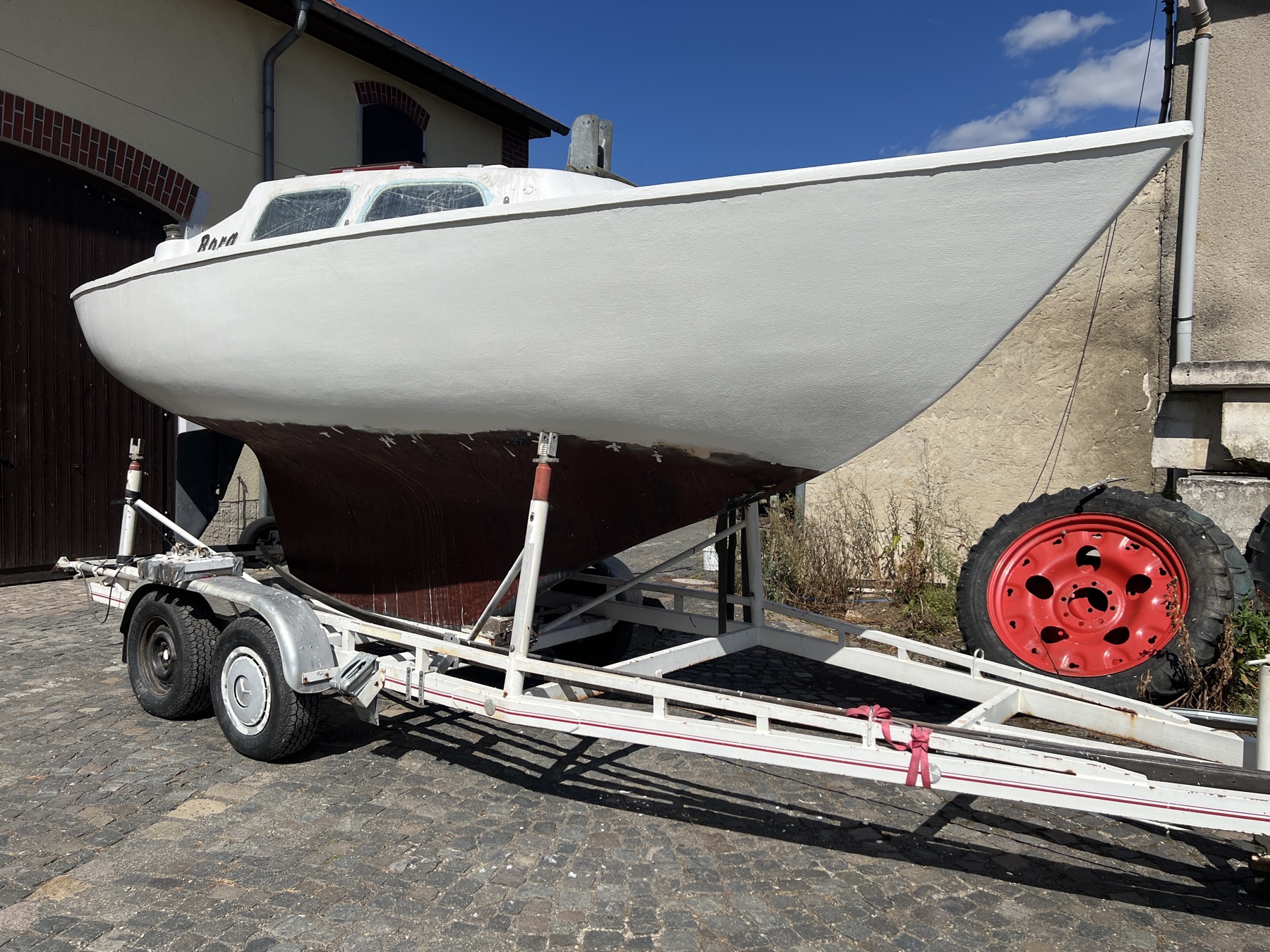
How we gave our Hurley 22 a new gelcoat finish of the highest quality and durability: 6 layers of polyester gelcoat, rolled by hand, sanded flat and polished to a high gloss – with all materials, grits and quantities.
By the Hurley 22 crew – done and documented ourselves · Updated on

At a Glance
A boatyard-quality gelcoat finish is created in four stages: apply the gelcoat in several layers, apply a guide coat, sand flat through eight grits and polish in four steps.
- Material: 13 kg polyester gelcoat with 20 % pure white color paste (PHD24.de) for our Hurley 22
- Application: 6 layers with a 15 cm velour roller (4 mm short pile) – layers 1–5 tacky, layer 6 tack-free with 5 % paraffin
- Sanding: P40 → P80 → P120 → P220 → P400 dry, P800 → P1200 → P2000 wet by hand
- Guide coat: 3M Dry Guide Coat or Edding ink thinned with acetone before every grit
- Polishing: 3M Perfect-It Marine in 4 steps with a 150 mm foam pad
- Effort: high – most of the work is in the sanding
Why This Guide?
Countless forums are full of half-truths about gelcoat: you can't roll it, it always stays tacky, one coat is enough, or a quick polish will do. The results are peeling layers, sticky surfaces and wavy hulls.
We carried out the entire process on our Hurley 22 ourselves and documented every step here with materials, quantities, grits and photos. To be honest: a high-quality gelcoat finish is a lot of work. But if you build it up this way, you get a coating whose gloss and durability can stand up to a professional boatyard finish.
Materials & Tools
Materials
- 13 kg polyester gelcoat (PHD24.de) incl. matching hardener
- Pure white color paste (PHD24.de), 20 % addition
- Paraffin solution for the topcoat layer (5 %)
- Acetone for degreasing and thinning
- 3M Dry Guide Coat or Edding ink (guide coat)
- Sanding discs Ø 225 mm: P40, P80, P120, P220
- Sanding discs 150 mm: P400
- Automotive wet sanding paper: P800, P1200, P2000
- 3M Perfect-It Marine polishing set (4 steps)
Tools
- 15 cm velour rollers, 4 mm short pile
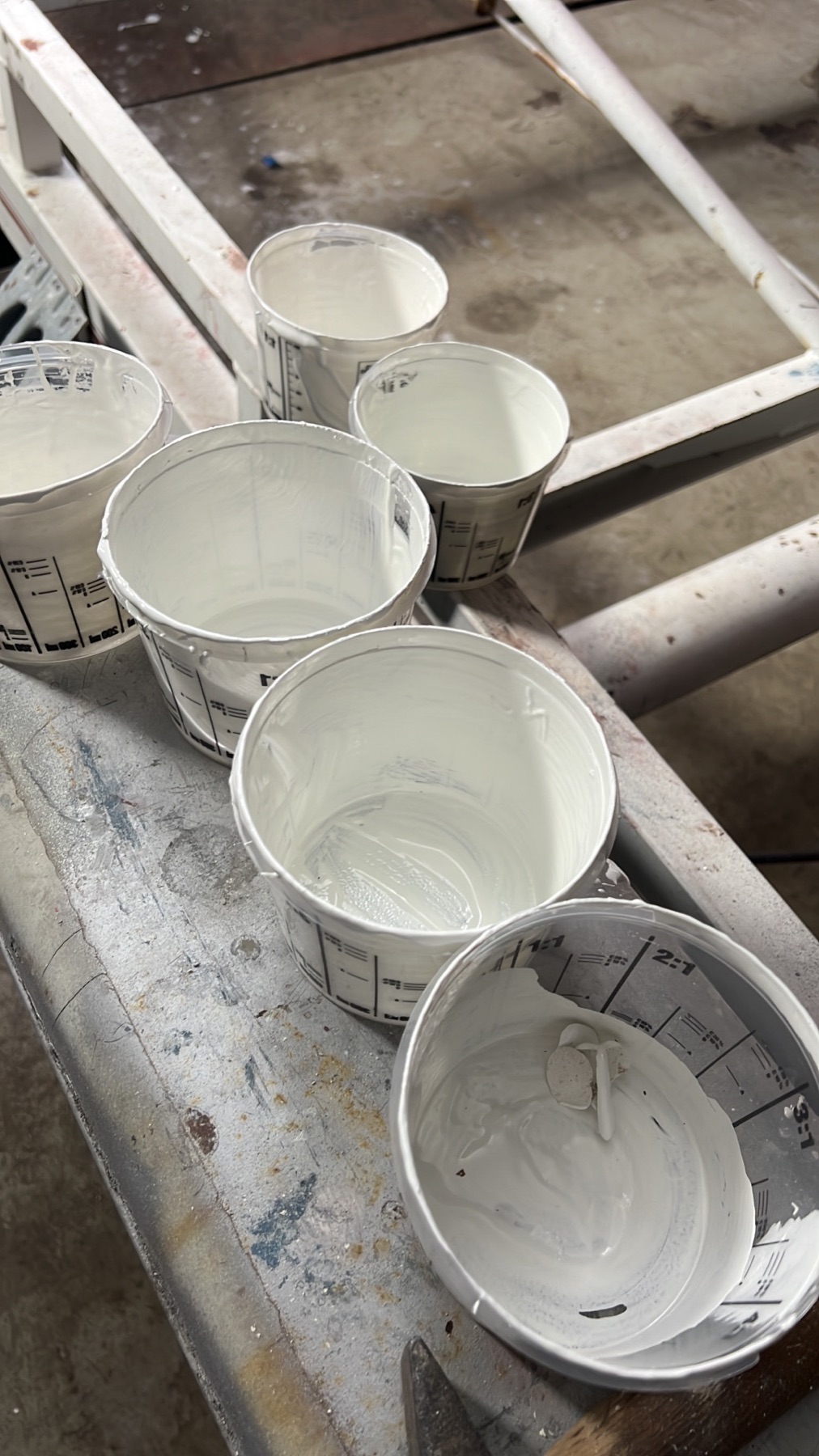
- Scale and mixing cups
- Drywall sander Ø 225 mm
- Festool random orbital sander 150 mm
- Rigid foam block for wet sanding
- Flex polisher with 150 mm foam pads
- Respirator with combination filter (A2/P3), nitrile gloves, safety glasses
Mixing & Applying 6 Layers of Gelcoat
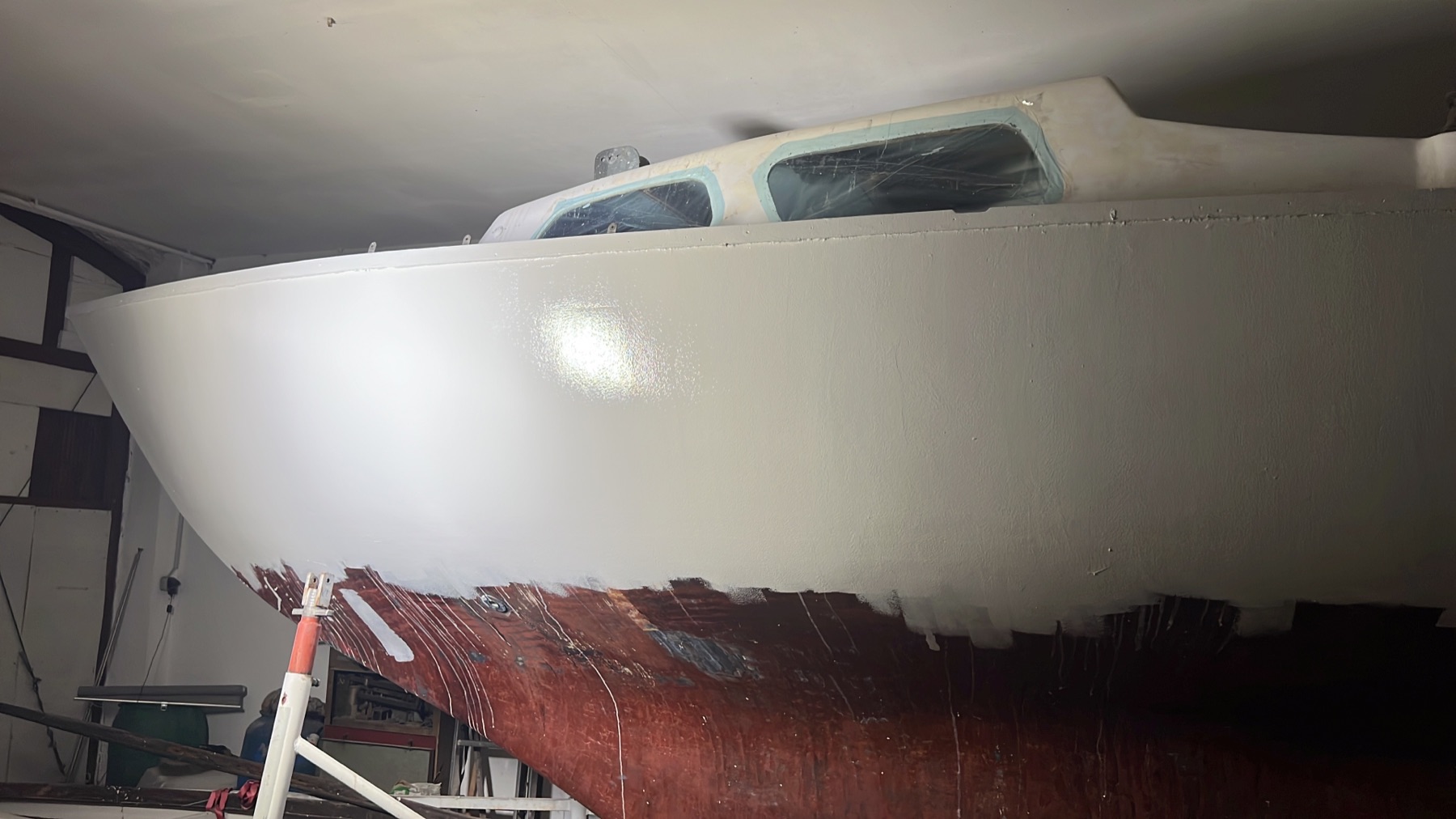
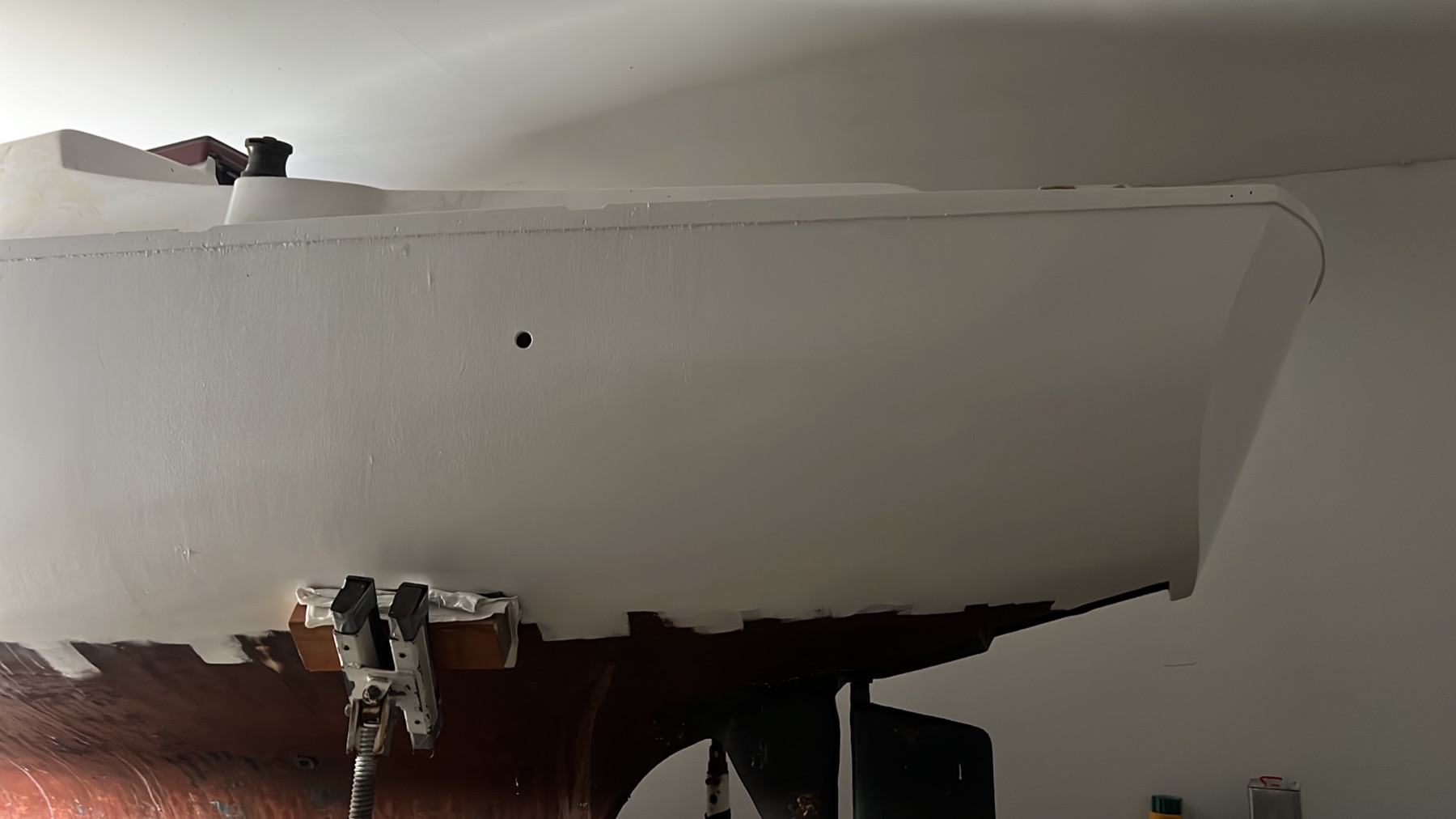
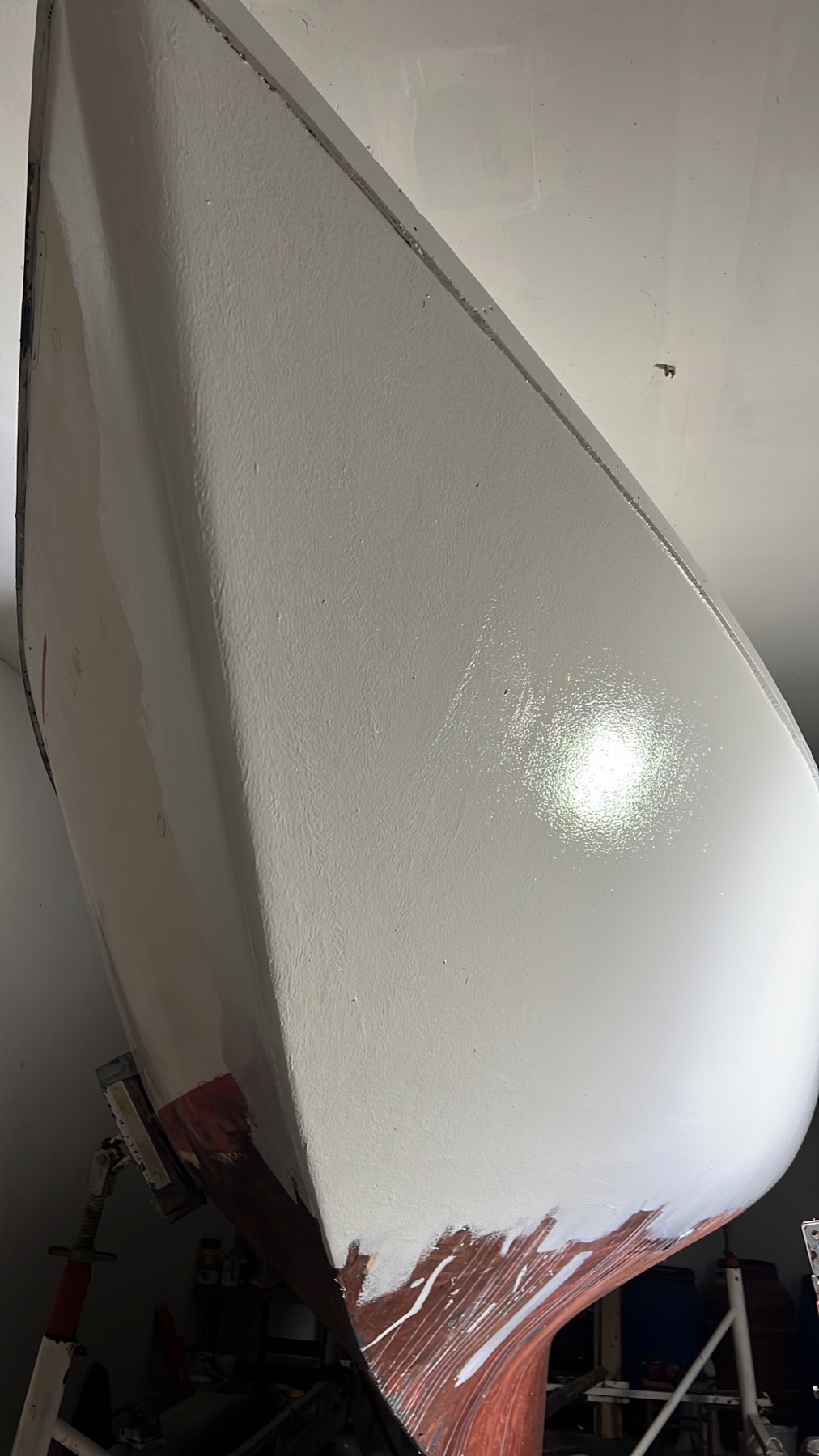
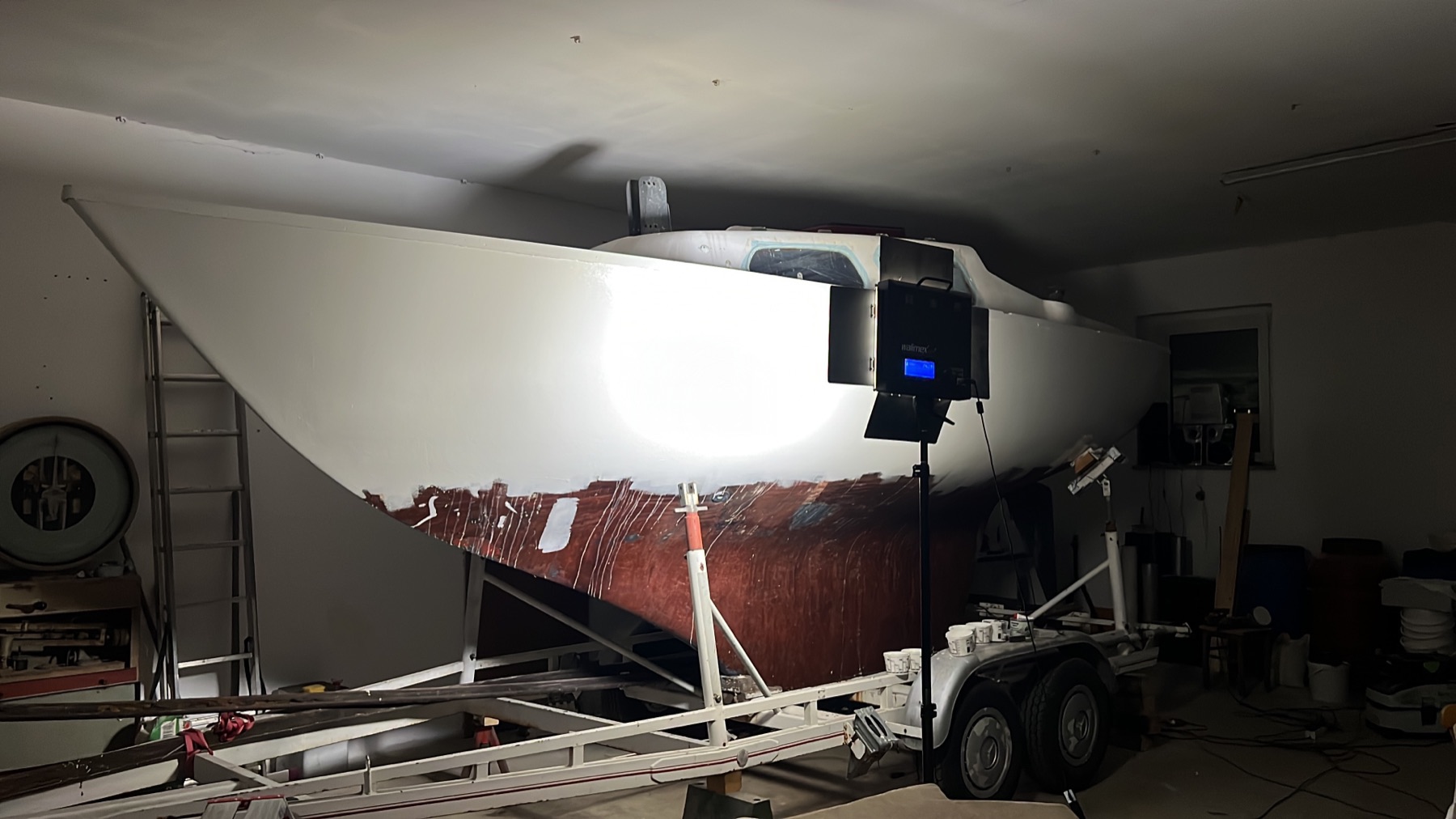
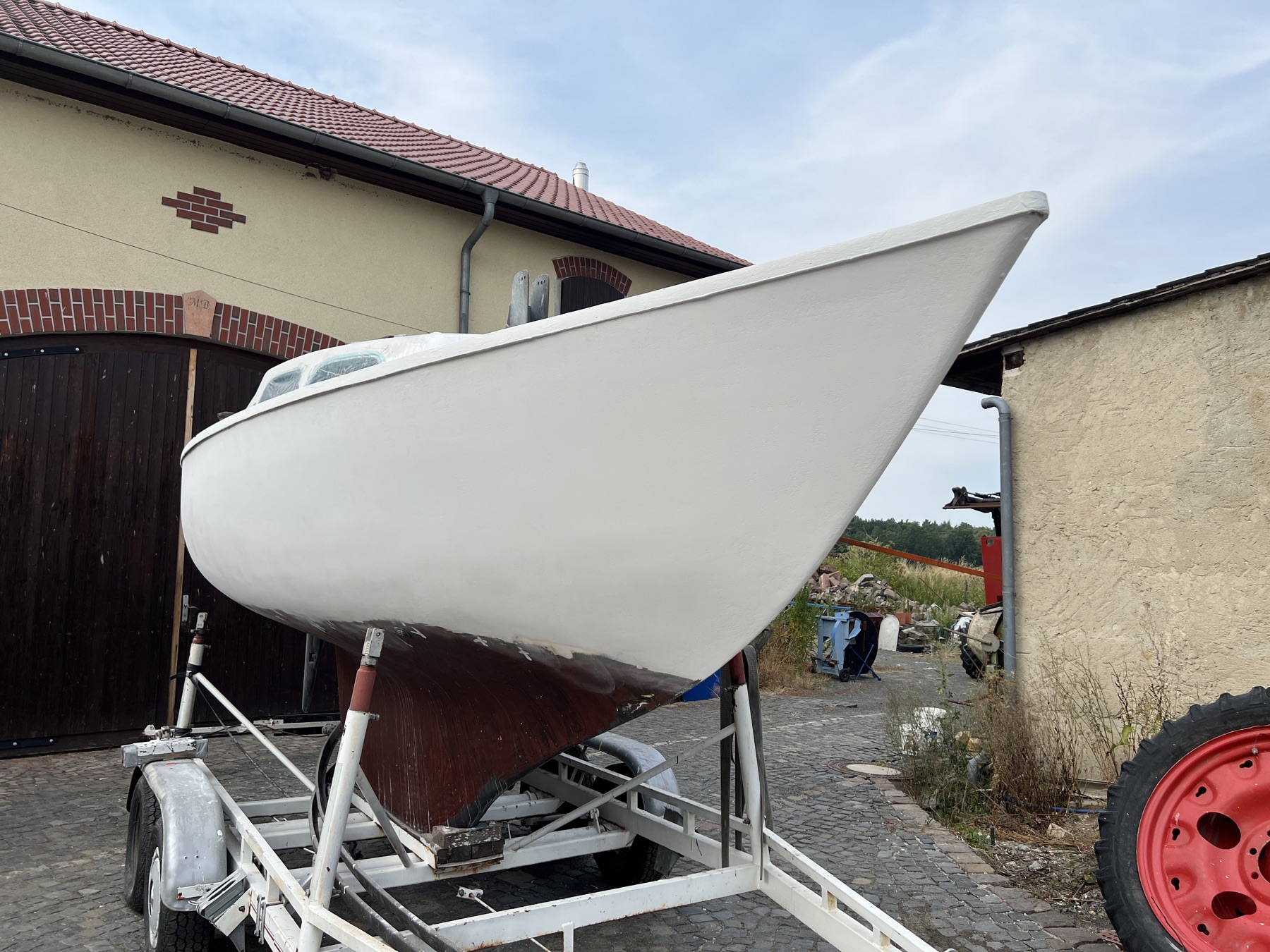
In total we rolled on 6 layers of polyester gelcoat. This thickness leaves enough material to sand the surface completely flat later without sanding through.
- Substrate: sand the old gelcoat, remove all dust and degrease with acetone.
- Mix the gelcoat thoroughly and bubble-free with 20 % pure white color paste (PHD24.de).
- Weigh the hardener exactly per the manufacturer's instructions and only mix small batches – pot life is short.
- Apply with a 15 cm velour roller (4 mm short pile), evenly and always finishing in one direction.
- Layers 1–5: gelcoat without paraffin – the surface stays tacky and bonds chemically with the next layer.
- Apply the next layer while the previous one has gelled but is still tacky.
- Layer 6 (topcoat): add 5 % paraffin solution – the paraffin floats to the surface, seals out air and the gelcoat cures tack-free.
Applying a Guide Coat
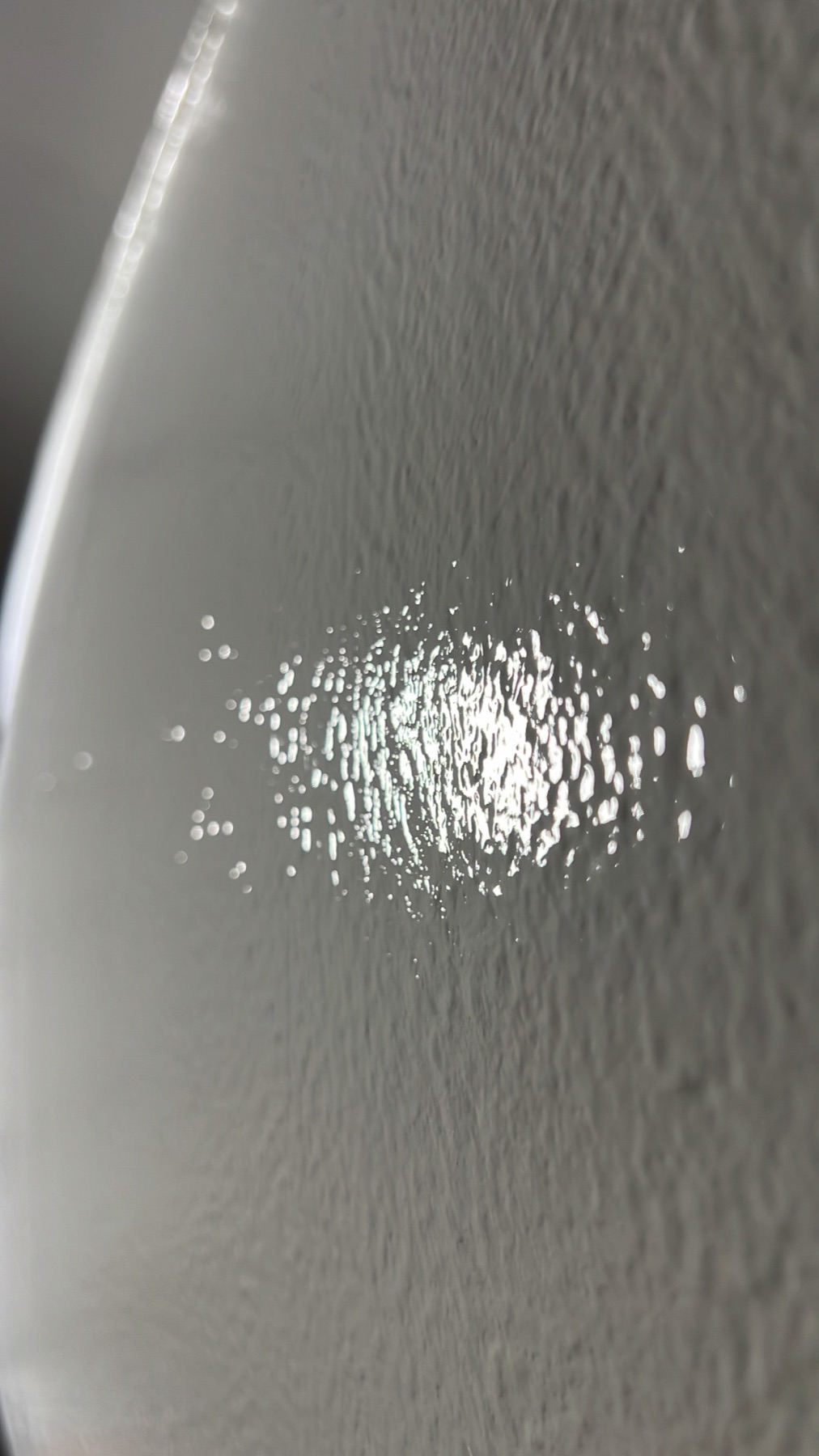
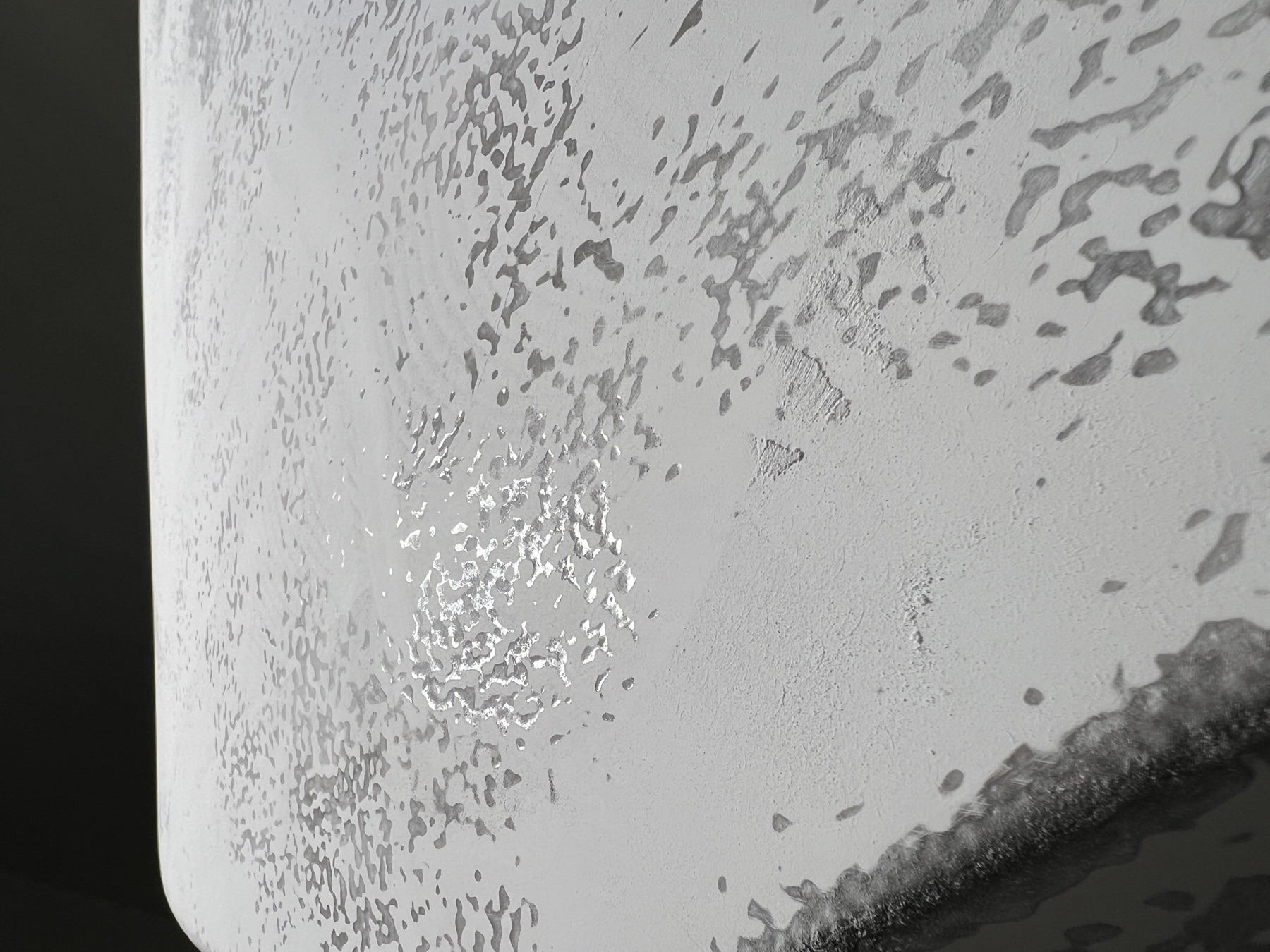
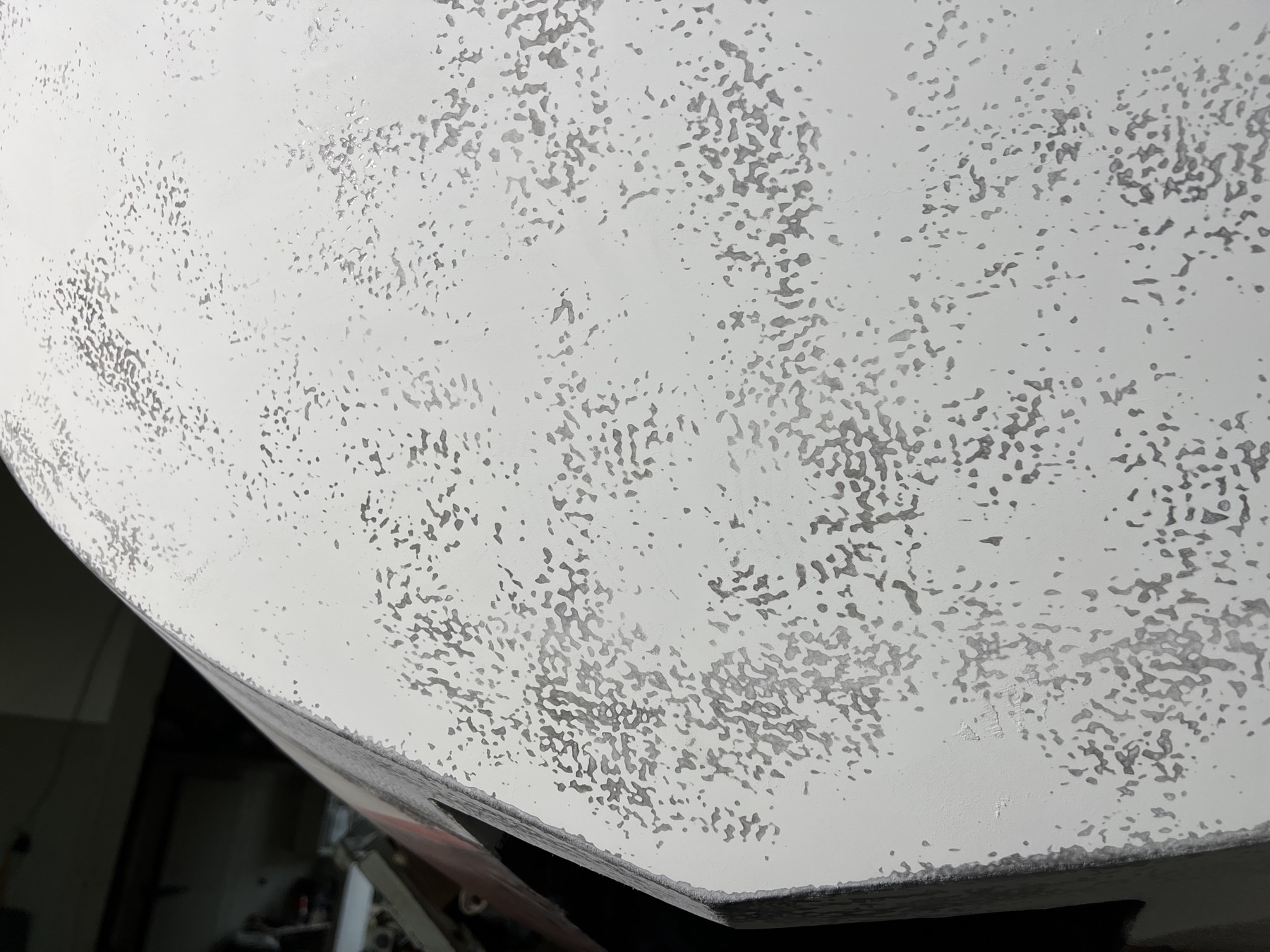
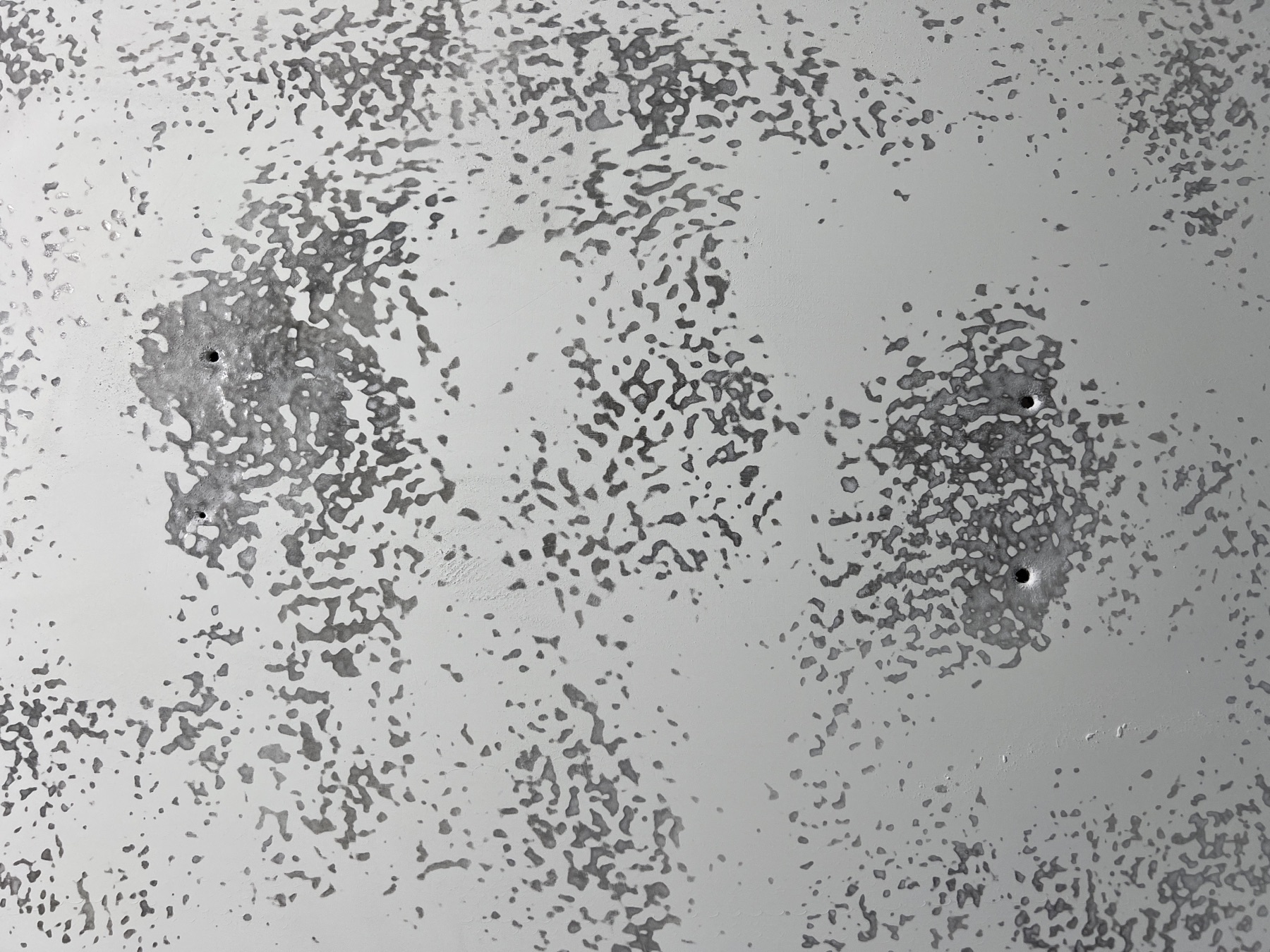
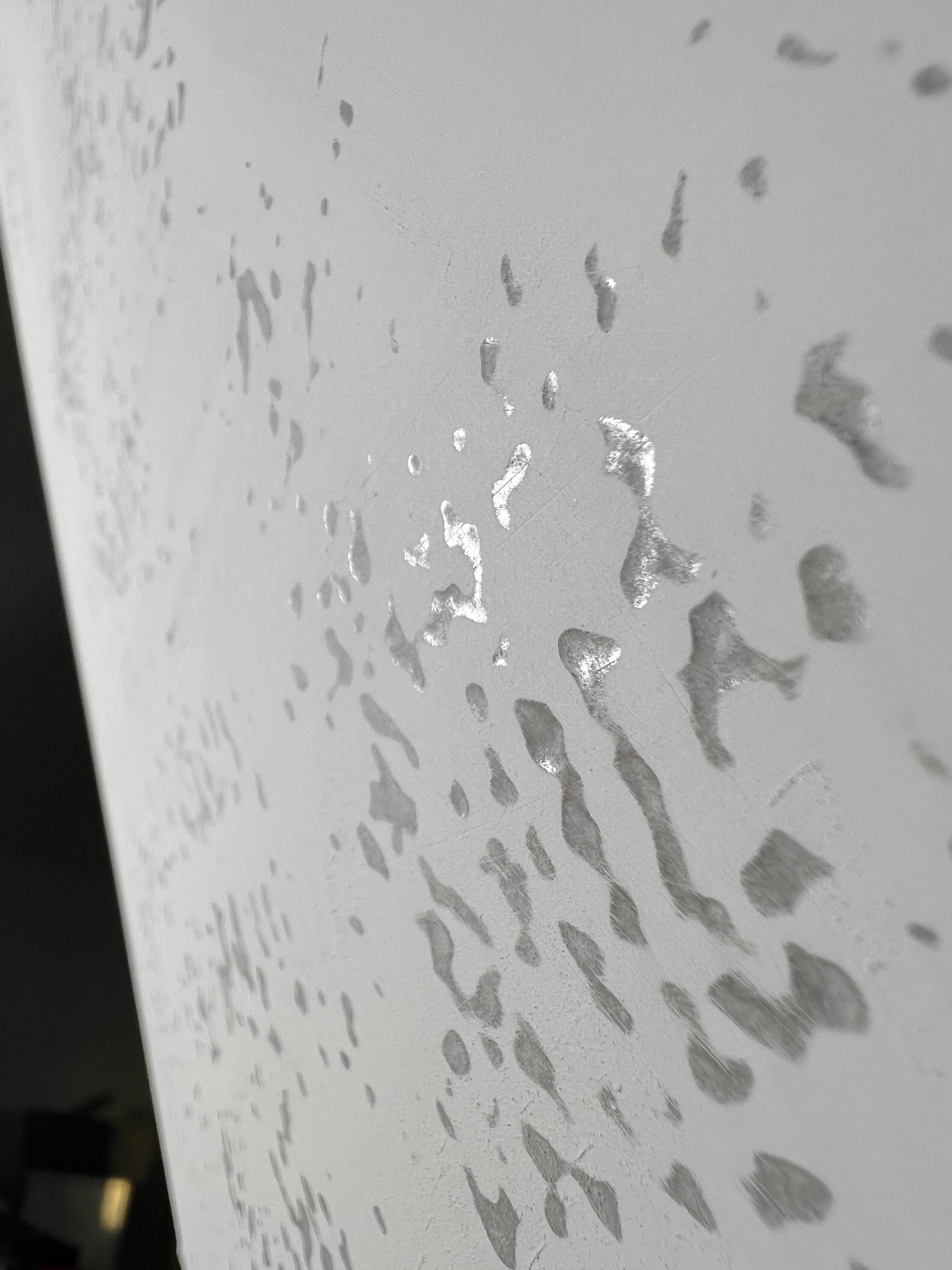
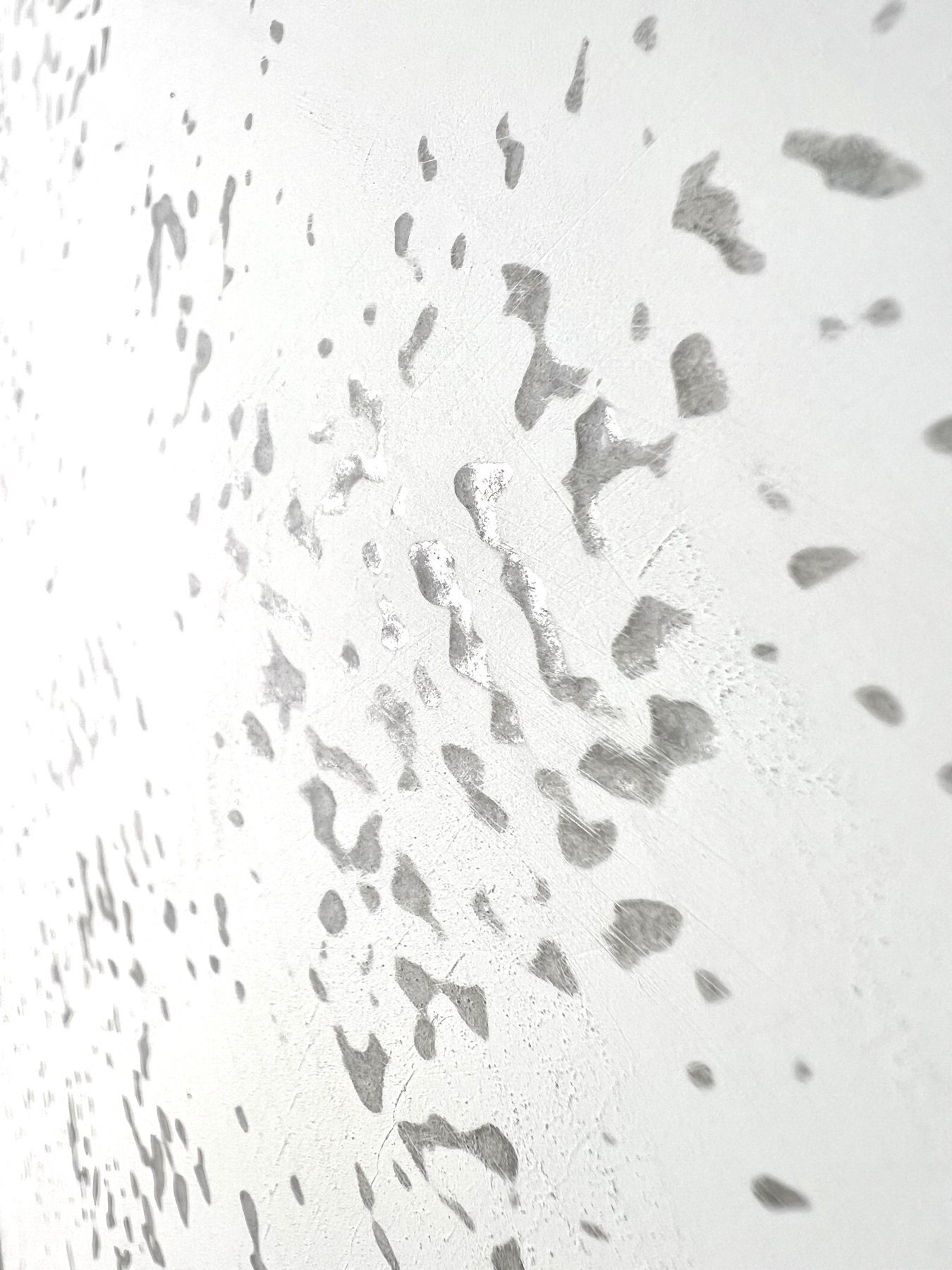
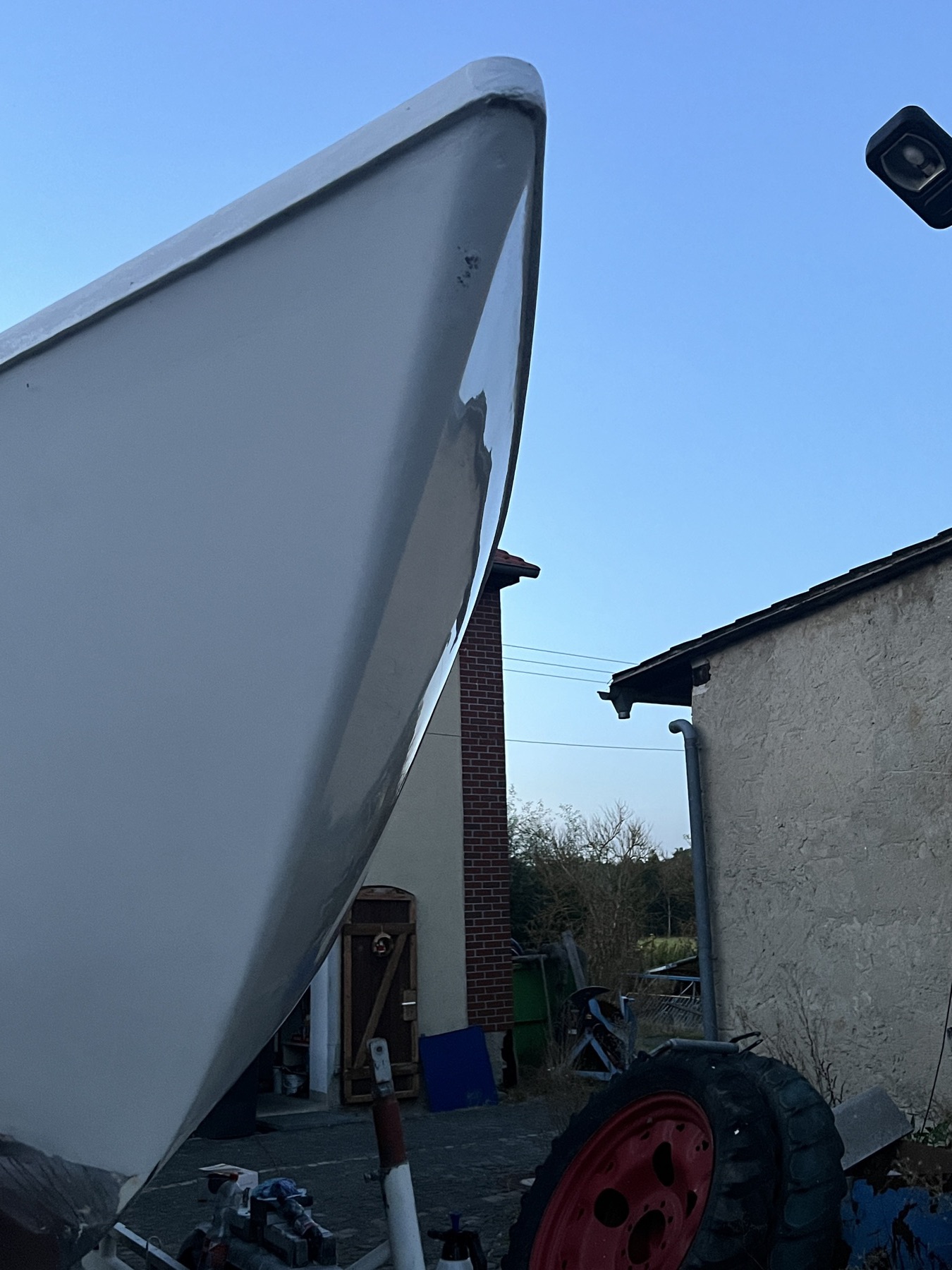
Before sanding, the cured surface gets a dark guide coat. It reveals every irregularity: high spots are sanded clean immediately, while the color stays in the low spots.
- Apply 3M Dry Guide Coat – alternatively Edding ink heavily thinned with acetone.
- Apply a very thin, even layer; it disappears completely while sanding.
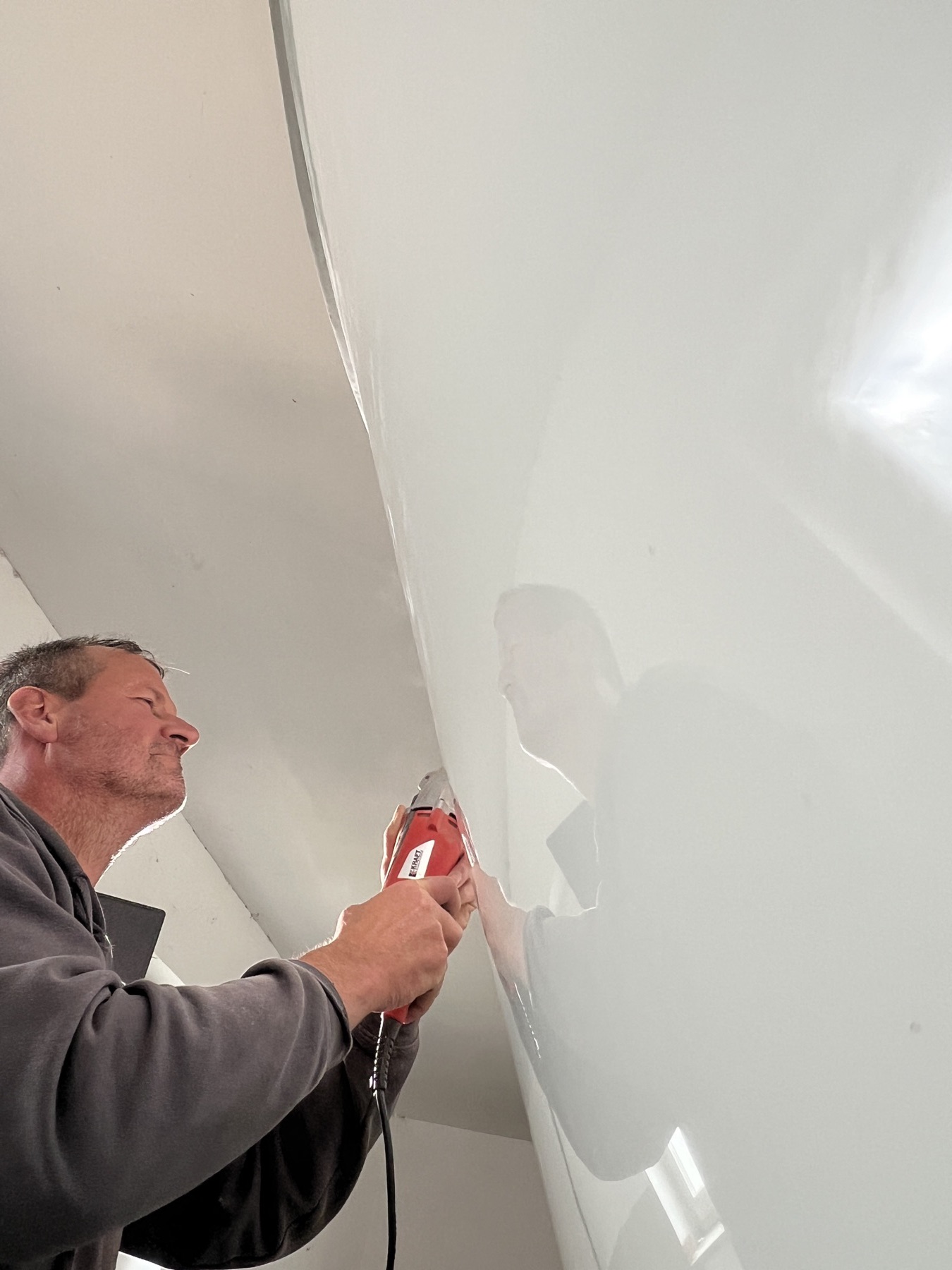
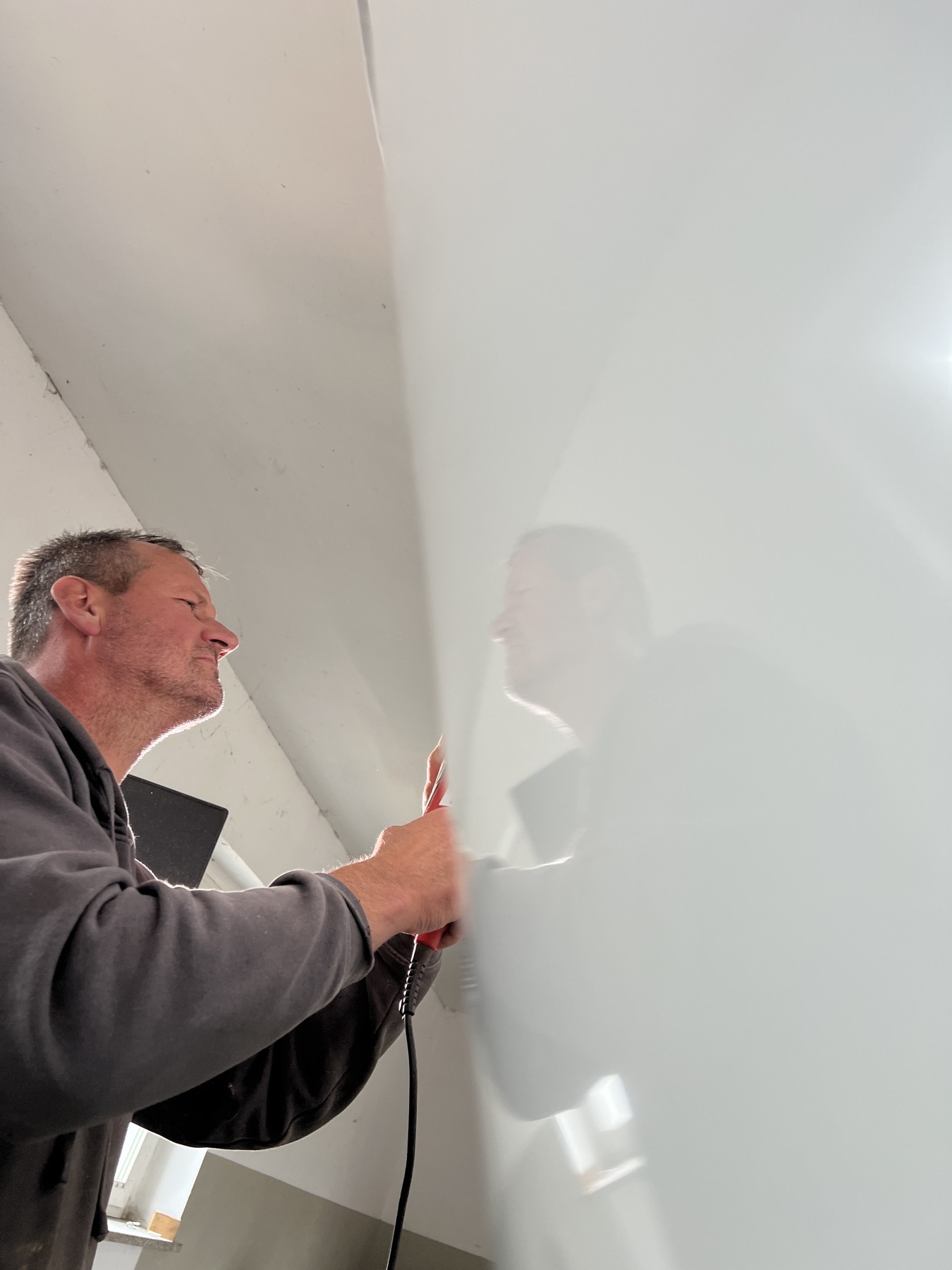
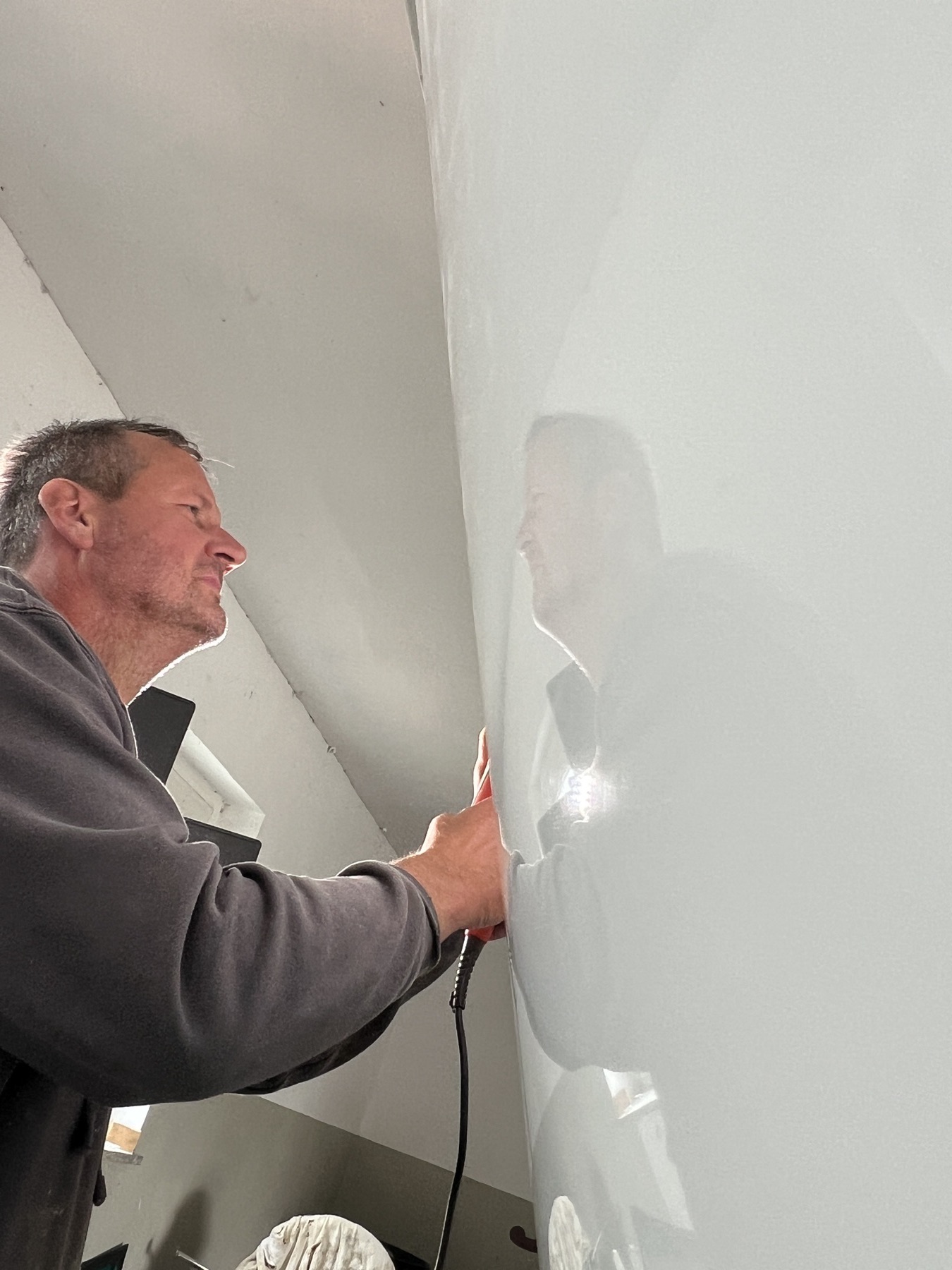
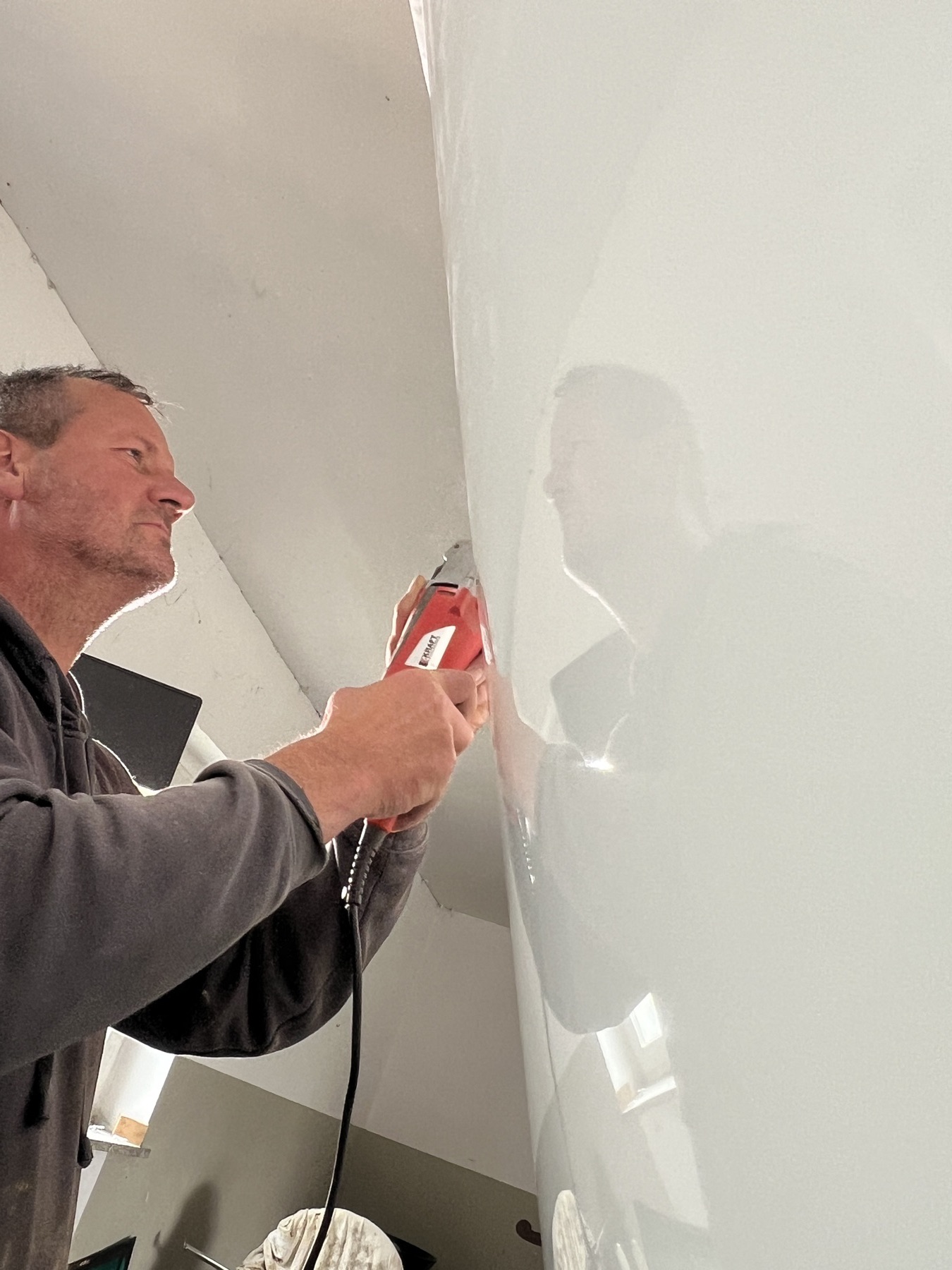
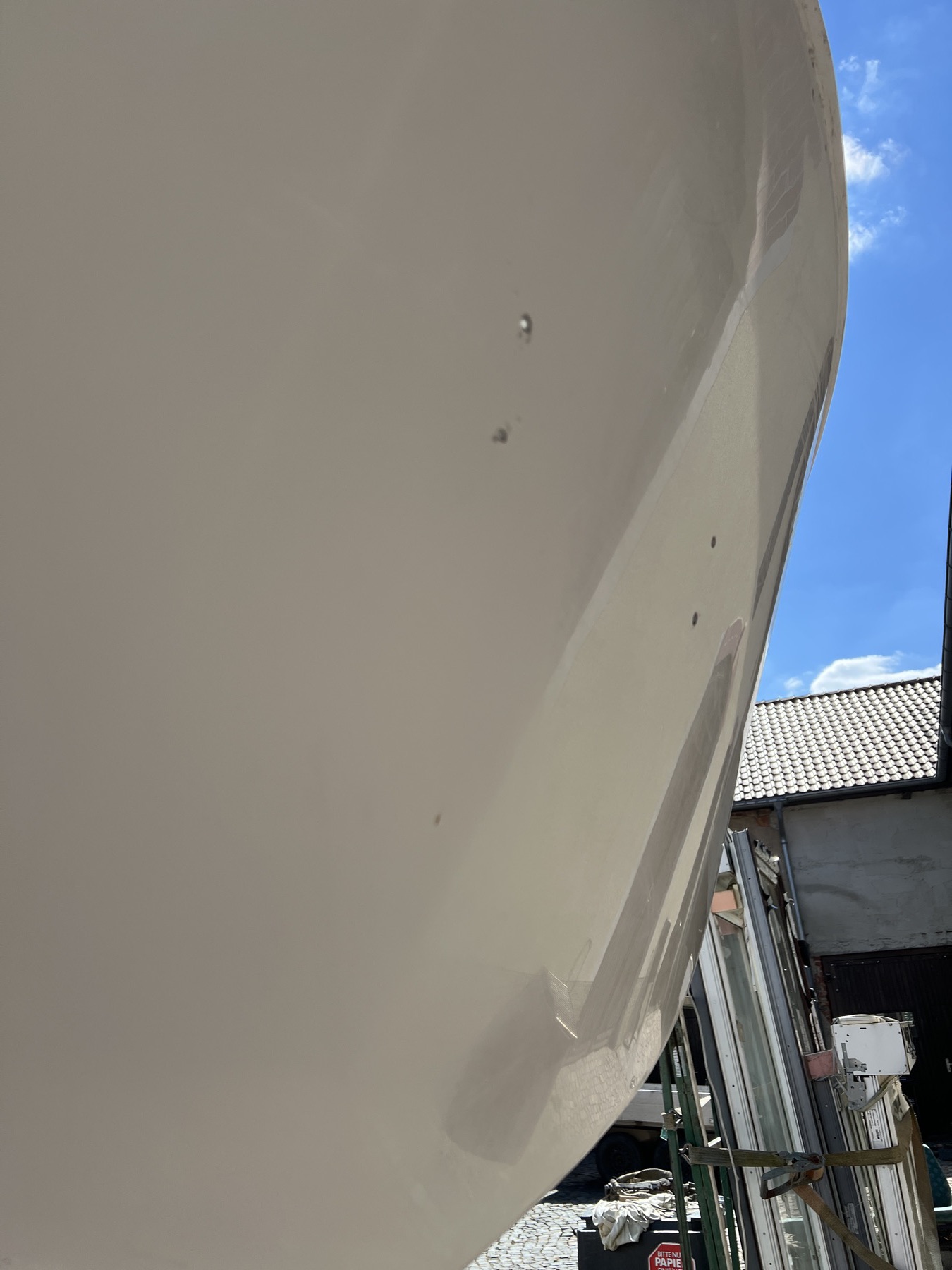
- The pattern of spots shows where material still needs to be removed (see photos).
Sanding Flat – from P40 to P2000
Sanding is the most labor-intensive part and determines the final result. A guide coat is reapplied in between – Dry Guide up to P400, highly thinned Edding ink in acetone from P400 on.
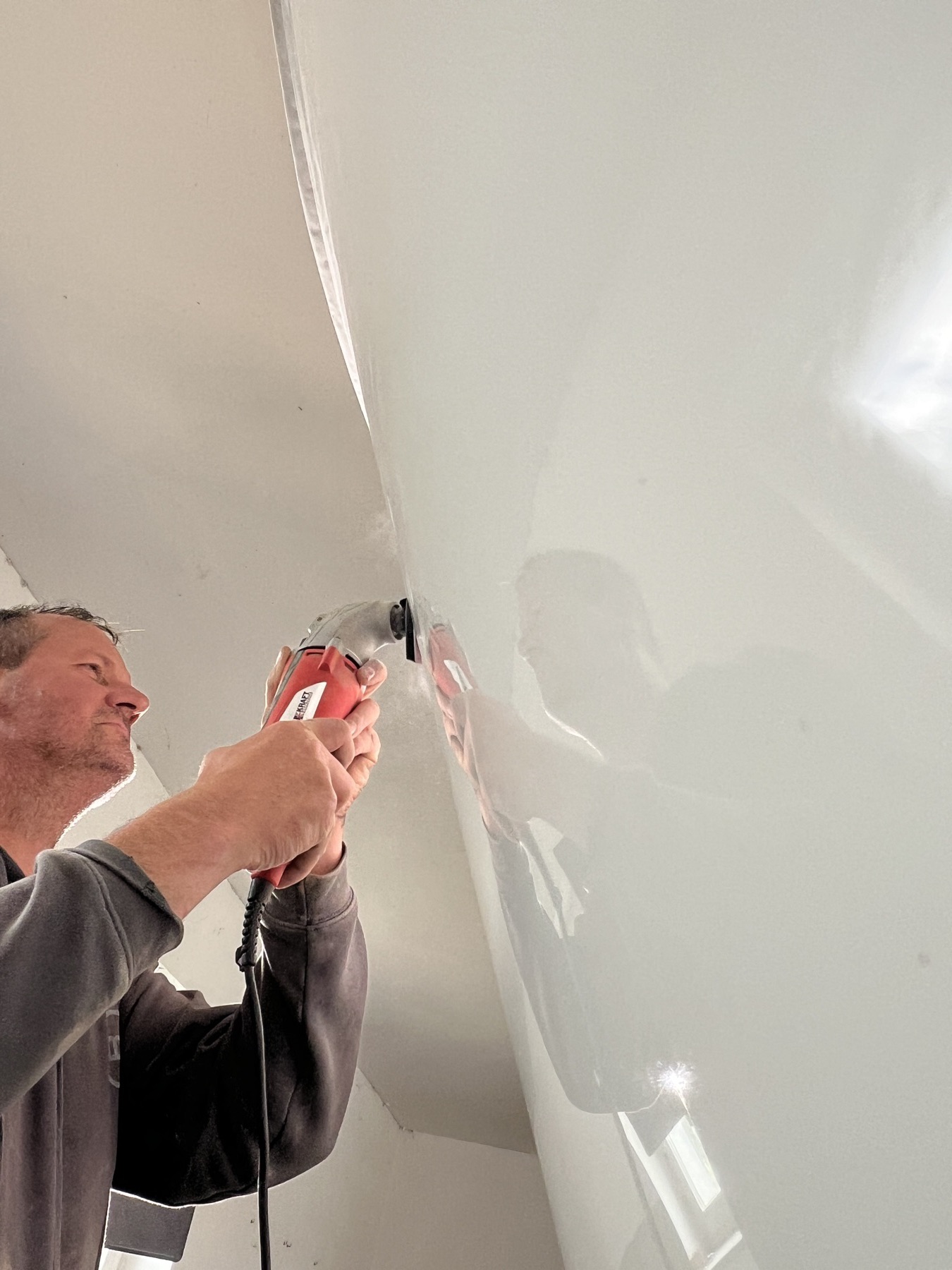
- Rough sanding with a drywall sander (Ø 225 mm): P40 → P80 → P120 → P220. The large disc sands the roller texture flat over large areas.
- Fine sanding with a Festool random orbital sander 150 mm: P400.
- Wet sanding by hand with a rigid foam block and automotive wet sanding paper: P800 → P1200 → P2000.
- Use plenty of water when wet sanding and rinse the paper regularly.
- Clean the surface after each grit and check it with a guide coat.
Polishing to a Mirror Finish
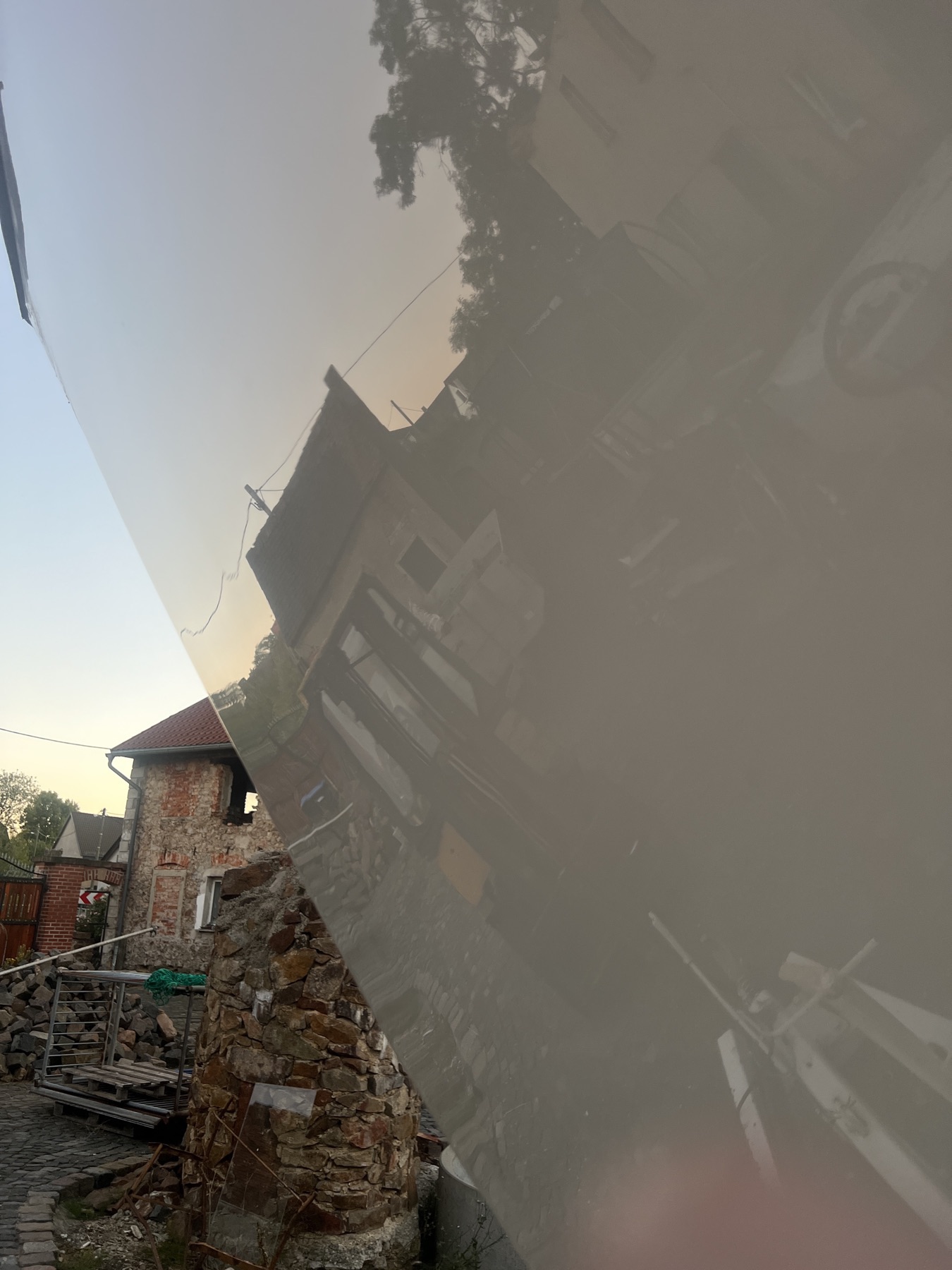
Finally, the sanded surface is polished to a high gloss in four steps. Afterwards the hull reflects its surroundings like a mirror.
- Polisher: Flex with a 150 mm foam pad.
- 3M Perfect-It Marine polishing set in 4 steps, from coarse to fine.
- Use a separate, clean pad for each polishing step.
- Work in small sections at moderate speed and avoid heat build-up.
- Remove polish residue between steps with a clean microfiber cloth.
Tips for Quality & Durability
- Work at approx. 18–25 °C and low humidity, out of direct sunlight – temperature strongly affects pot life and curing.
- Let the gelcoat cure completely before sanding.
- Never measure hardener by eye – too much or too little makes the gelcoat brittle or soft.
- Styrene fumes and sanding dust are hazardous: respirator, gloves, safety glasses and good ventilation are a must.
- Clean tools with acetone or dispose of rollers immediately after use.
- For maintenance, seal the polished hull regularly with a marine wax – it protects against UV and dirt.
Frequently Asked Questions About Re-Gelcoating
Can you apply gelcoat with a roller?
Yes. We applied 6 layers of polyester gelcoat with a 15 cm velour roller (4 mm short pile) – no spray gun. The surface is slightly wavy afterwards. This roller texture is sanded flat from P40 to P2000 using a guide coat and then polished to a high gloss.
Why does gelcoat stay tacky?
Polyester gelcoat does not fully cure at the surface when exposed to air (air inhibition) and stays tacky. For intermediate layers this is intended, because the next layer bonds chemically to it. To make the final layer cure tack-free, you add paraffin solution – we used 5 %. The paraffin floats to the surface and seals out the air.
When do you add paraffin (wax) to gelcoat?
Only to the final layer, the so-called topcoat. If paraffin is used in intermediate layers, it forms a wax film that the next layer does not bond to properly. On our Hurley 22, layers 1 to 5 contained no paraffin and only the 6th layer had 5 % paraffin added.
How many coats of gelcoat do you need?
We applied 6 layers of polyester gelcoat. Several layers are needed because a lot of material is removed when sanding flat from P40 to P2000. The build-up must be thick enough to sand the roller texture completely flat without sanding through to the substrate.
How much gelcoat do you need for a boat?
For our Hurley 22 (a 22-foot sailboat, approx. 6.7 m long) we used a total of 13 kg of polyester gelcoat from PHD24.de for 6 layers, tinted with 20 % pure white color paste. The quantity required depends on the surface area, the number of layers and the layer thickness.
What is a guide coat when sanding?
A guide coat is a very thin, dark layer of color – for example 3M Dry Guide Coat or Edding ink heavily thinned with acetone. When sanding, it disappears first on the high spots and remains in the low spots. This shows exactly where the surface is not yet flat. It is reapplied before each new grit.
What grit do you sand gelcoat with?
We sanded in eight stages: dry with a drywall sander (Ø 225 mm) at P40, P80, P120 and P220, then with a random orbital sander (150 mm) at P400 and finally wet by hand with a rigid foam block and automotive wet sanding paper at P800, P1200 and P2000. Never skip a grit.
How do you polish gelcoat to a high gloss?
After wet sanding with P2000, the surface is polished with a machine polisher (we used a Flex with a 150 mm foam pad) in several steps from coarse to fine. We used the 4-step 3M Perfect-It Marine polishing set. A clean sanding finish up to P2000 is key to a mirror finish.
How much work is it to re-gelcoat a boat?
A lot – it is not a weekend project. Applying the 6 layers is relatively quick; most of the work is in the sanding: eight grits, each with its own guide coat, the fine grits wet by hand. This is followed by the 4-step polish. If you invest this effort, you get a very durable surface with a mirror finish.
Can you apply new gelcoat over old gelcoat?
Yes, if the substrate is properly prepared: the old gelcoat is sanded, thoroughly cleaned of dust and degreased with acetone. We built up the 6 new layers of polyester gelcoat on this sound substrate.
Questions about our process or your own experience with gelcoat? We'd love to hear from you.
Get in touch